
Proper Onsite Salt Storage
Background
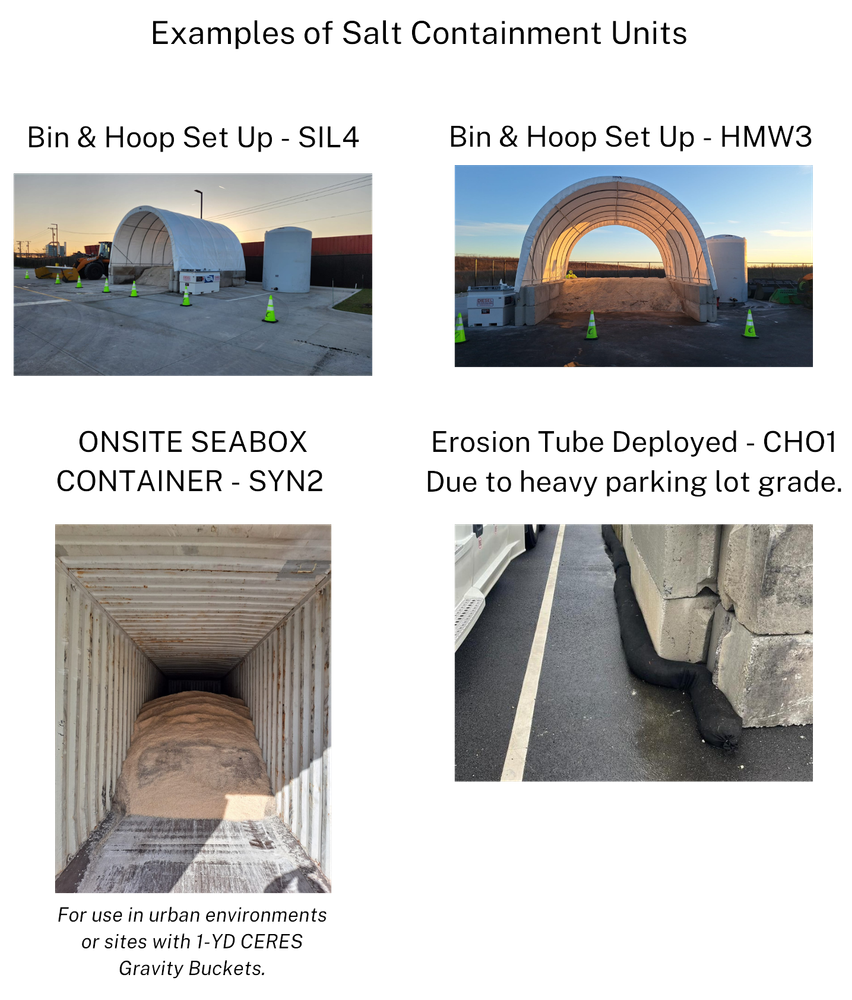
Bulk salt is stored using various methods. Generally, "Bin & Hoop" setups are placed on sites 500K FT2 or larger. This will allow CERES buckets to scoop and salt. These bins require hoops to shield the salt from rain and reduce incidents of tarps blowing off of the salt pile. This is in line with the written Amazon SOW. Additional precautions should be considered depending on the pitch and grade of the storage area. Operations should determine if erosion tubes/socks should be implemented to protect the site from run-off further. "Runoff" to significant material displacement; minor leaching is not considered "run-off" by industry standards.**East Coast Facilities standardized salt bin infrastructure, 18x24' with engineered hoop structure.
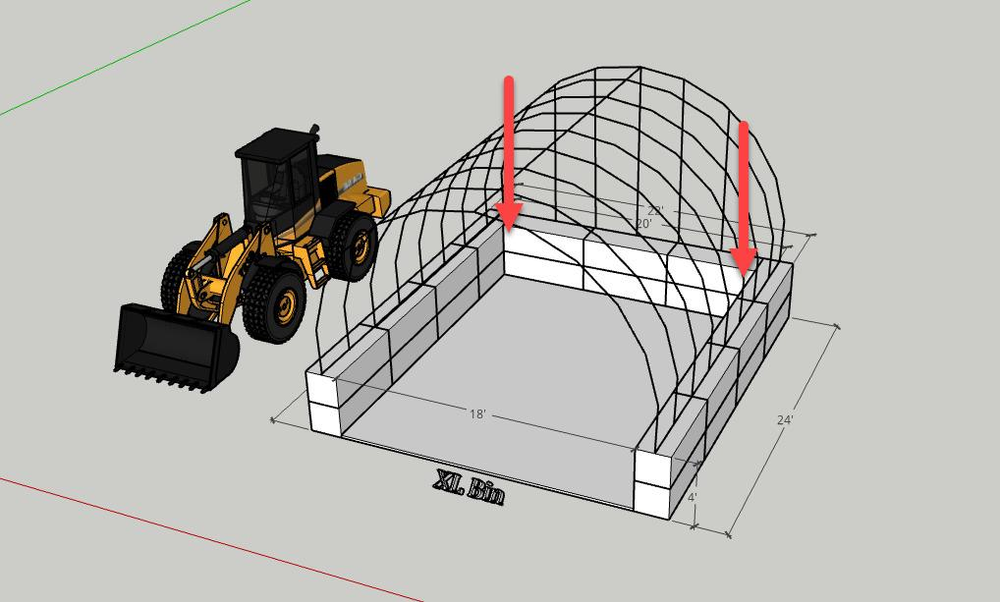
These setups cost approximately seven to ten thousand dollars in direct costs plus 45 man-hours of one-time set-up labor. ECF personnel must work with Amazon personnel to identify a semi-permanent location for these structures. They should remain in place for the duration of our engagement. If local stakeholders require these structures or the bulk salt in dry storage to be moved off-site during the offseason, it will result in additional costs.
Installation of a Semi-Permanant Salt Bin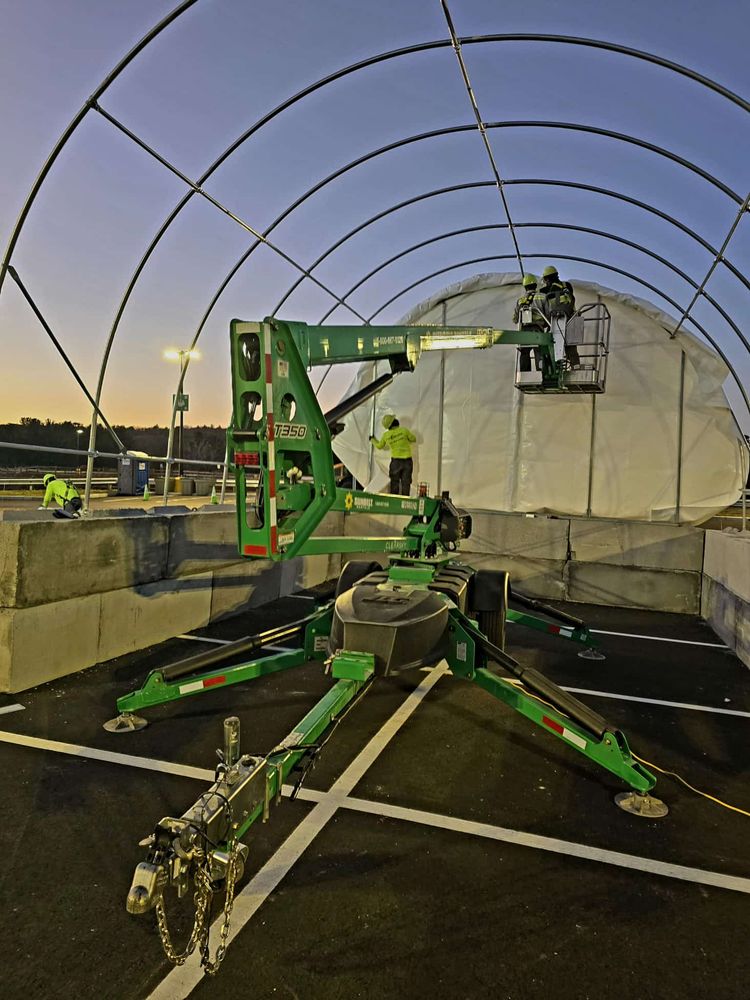
What is a CERES bucket?
A CERES bucket is an ECF proprietary engineered salting bucket. It mounts on our large wheel loaders and can scoop and salt, thus eliminating expensive salting trucks and their associated drivers. This reduces Amazon's costs because it maximizes heavy equipment utilization. 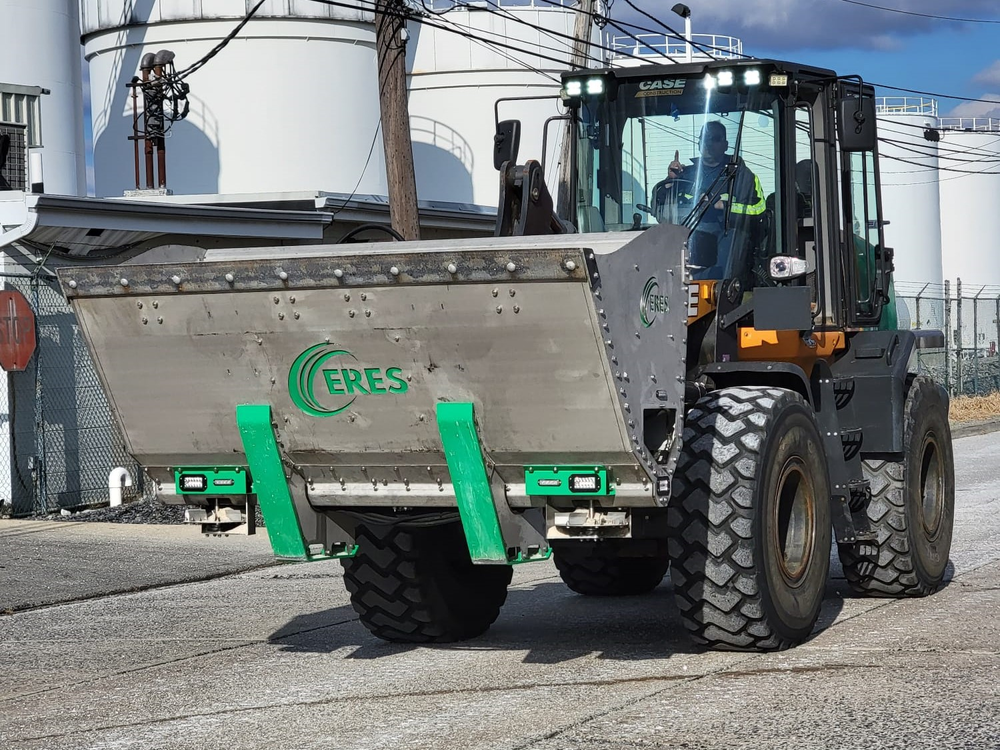
A second option for smaller sites or urban locations is to place a sea box on the site and fill it with salt. This option is only available if the site will be loaded with a skid-loader equipped with a 1.0 cubic yard CERES bucket.
Please see Amazon Snow Removal SOW
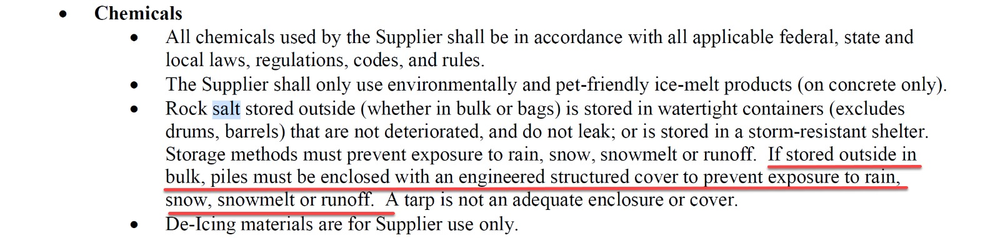
**It is recommended that a balanced approach be taken when examining chloride impacts from minor leaching of salt piles. Minor leaching or salt piles are a fraction of a fraction of the chlorides that enter the stormwater system compared to the impacts of actual salting operations, all of which enter the stormwater system and surrounding watershed.
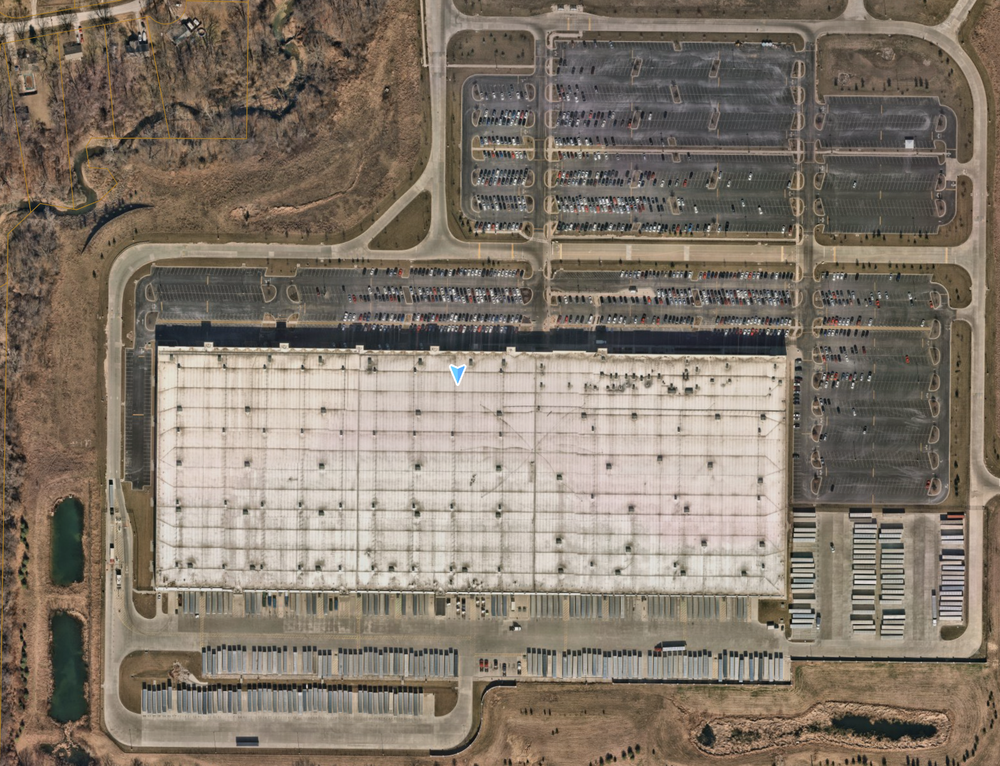
Aerial images of salted sites illustrate true "run-off" from necessary deicing applications.
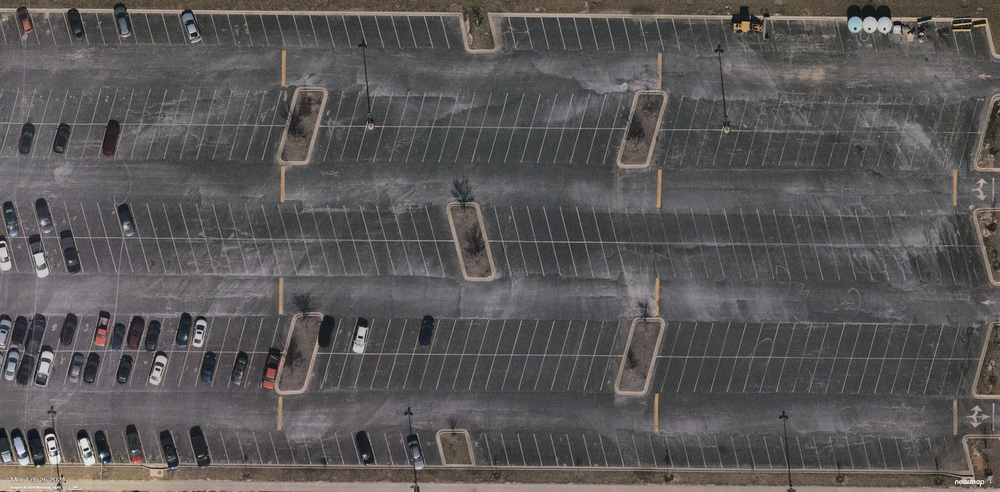
Example AR Sortable. White indicates heavy salting at 1/2 - 1 ton per acre per application.
Close Up View
If you still have a question, we’re here to help. Contact us